Explanatory report: participant 1112
"Space of Deepening"
In the beginning there was the question: Can there even be a form that contains this level of horror, human tragedy, sadistic strategies; adequately represents all we know about the Holocaust?
What remains is the deep sadness and shame, but also the challenge of creating a space that gives expression to these feelings. Also a space for education and documentation, so that something like this never happens again.
With this in mind, I looked for elementary forms or concepts that only roughly describe the subject matter or allow it to take shape.
Reversal of Values!
It strikes me that in the tradition of the monument, the form or shape is mostly turned upwards, a "Gothic principle" so to speak. Against the background of the topic, a reversal of the values and the associated iconography seemed sensible to me: in this view of the "reversal" a hole is created, the negative form of the "Gothic". The hole appeared to me in its banality and, as a carrier of complex associations, a formal phenomenon that I pursued and made into my “Gestalt-Motif”.
The hole in space provokes respect and autonomy the deeper it gets. The depth can exert a suction. The hole provokes attention and caution. For me it is a symbol that makes the ambivalence of life and death visible and tangible and thus points to existential borderline situations. The flame represents knowledge and moves above the depths. Seen in this way, this room is used for meditation and contemplation. A space that should always keep the spirit of what happened present.
A space that, in order to counteract static moments, to which monuments and memorials unfortunately often succumb through habituation or forgetting; of art, in its diversity, could give space for changing contributions (gallery area in the inner upper circular ring) accompanied by conferences or events in the other part of the building that deal with the topic of the Holocaust. For reasons that lie in the complexity of the topic and the appropriate responsible mediation and didactics, I consider it important that there are premises where an archive may be housed; there are extensive documentation options; a media room/cinema is operated and a "guest room cafe" exists. This place can only be effective in a mobile combination of thoughts and enlightenment.
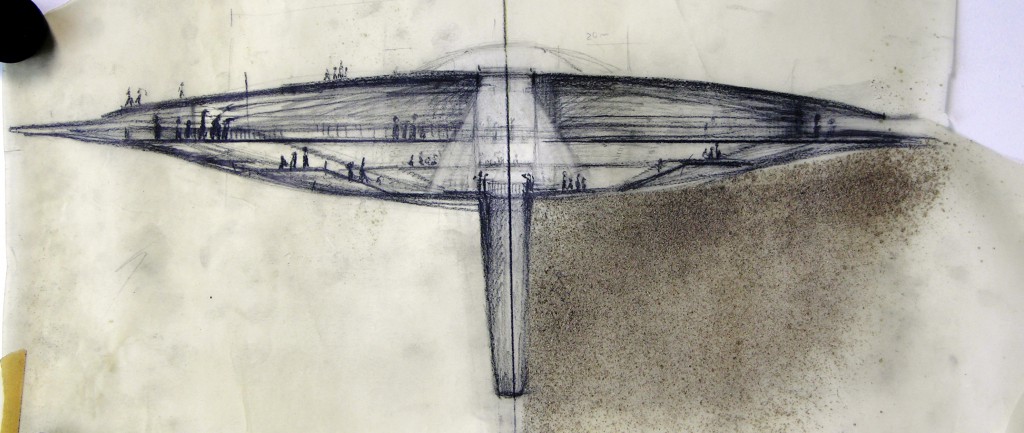 Cut to "ROOM OF DEEPNESS , Berlin, 1994 Berlin, 1994
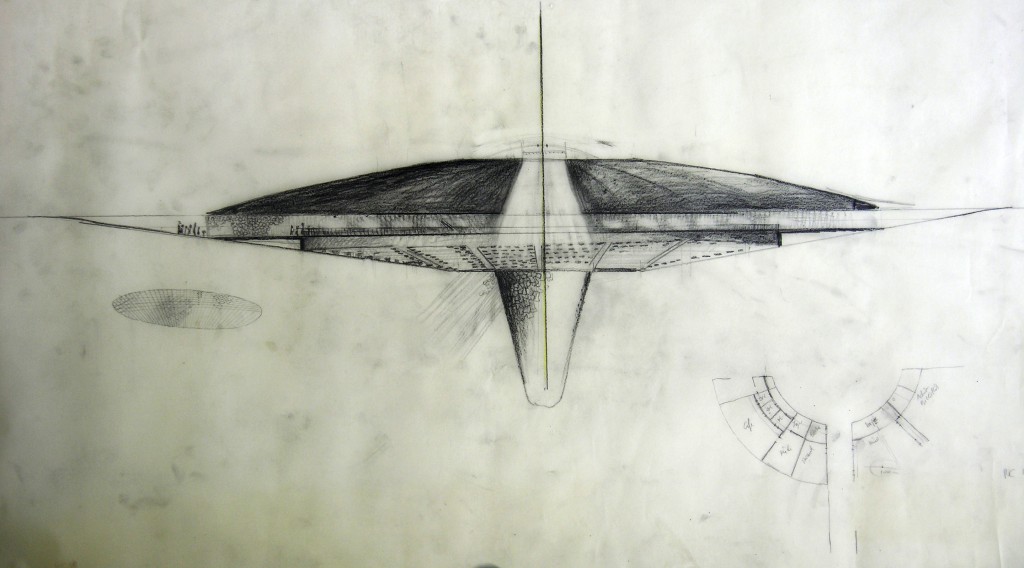 Side view of "ROOM OF DEEPNESS", Berlin, 1994 Berlin, 1994
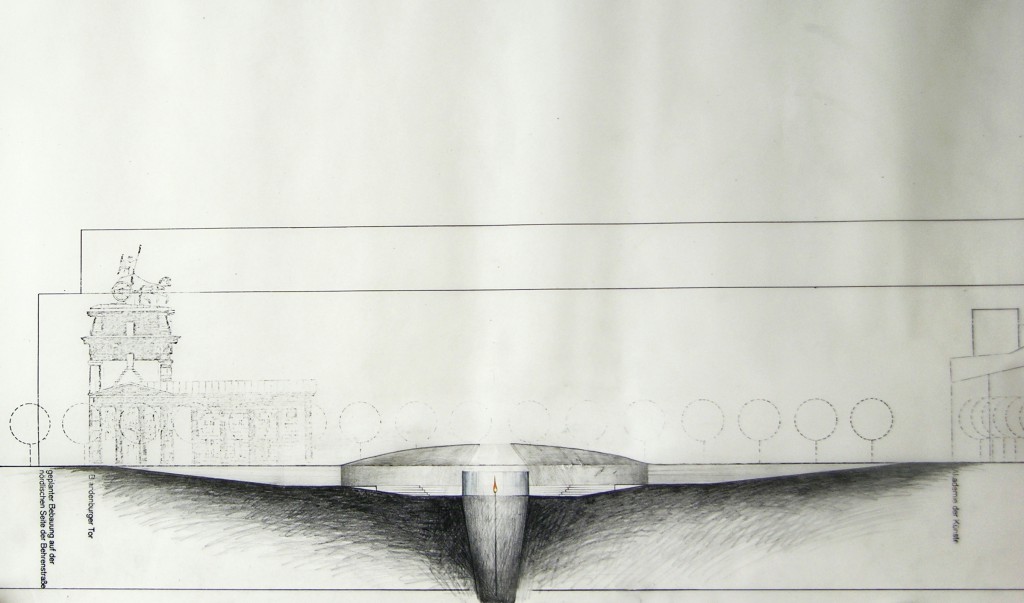 Location of "RAUM DER DEEPENING", Berlin, 1994 Berlin, 1994
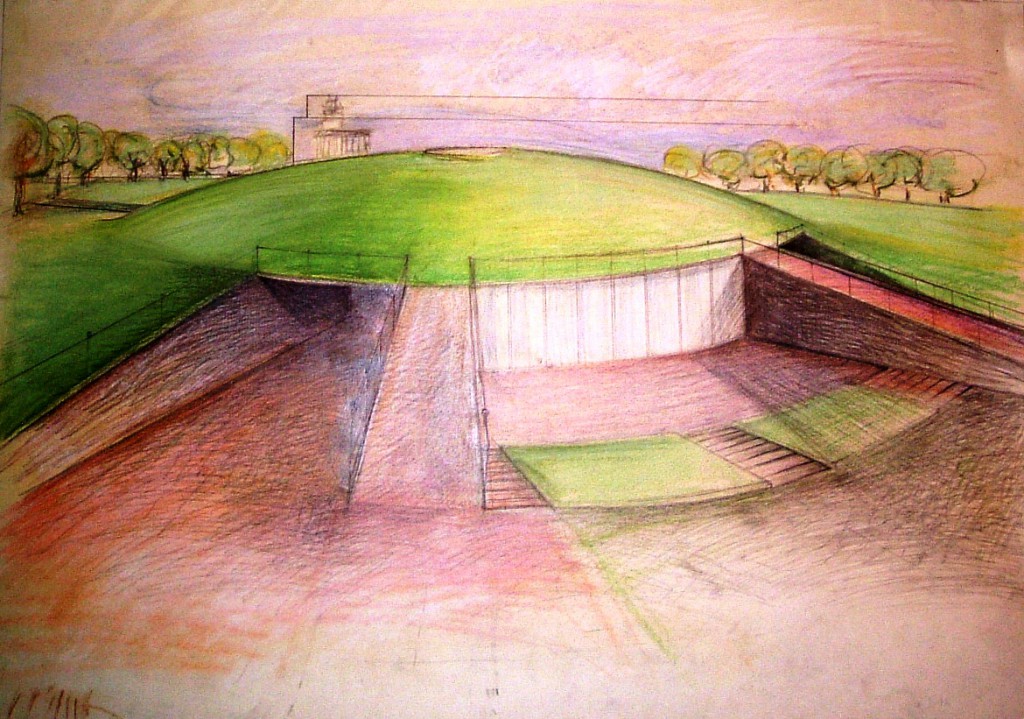 Exterior view: "Memorial to the Murdered Jews in Europe", 1994, pencil, colored pencil, pastel
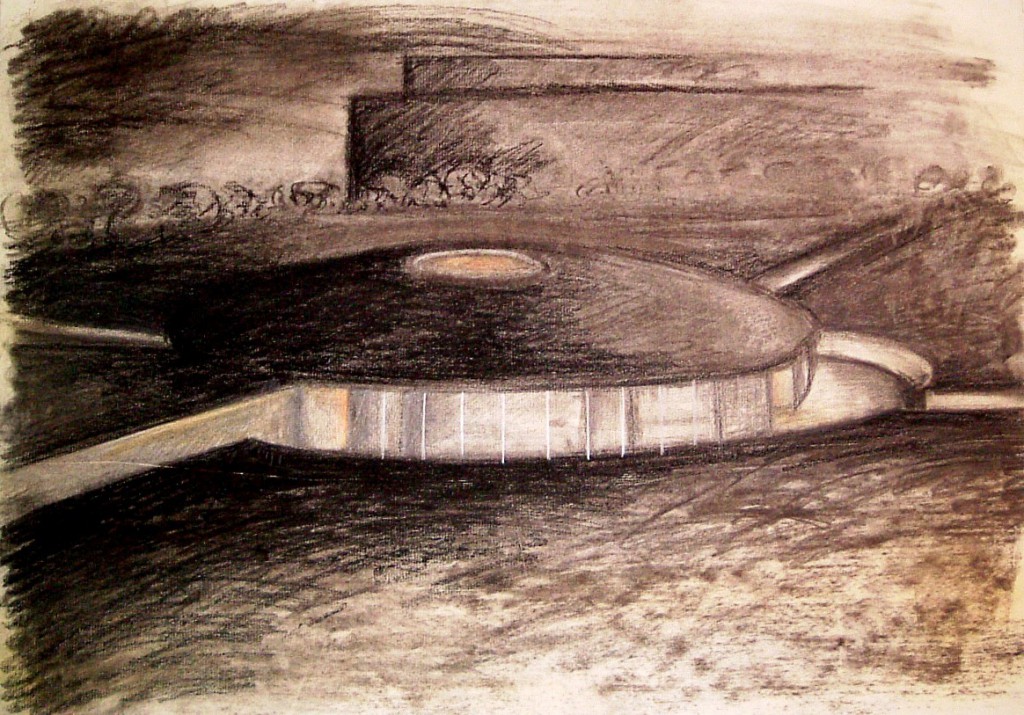 Night view: "Memorial to the Murdered Jews in Europe"
1994, pencil, charcoal, pastel, 42 X 59 cm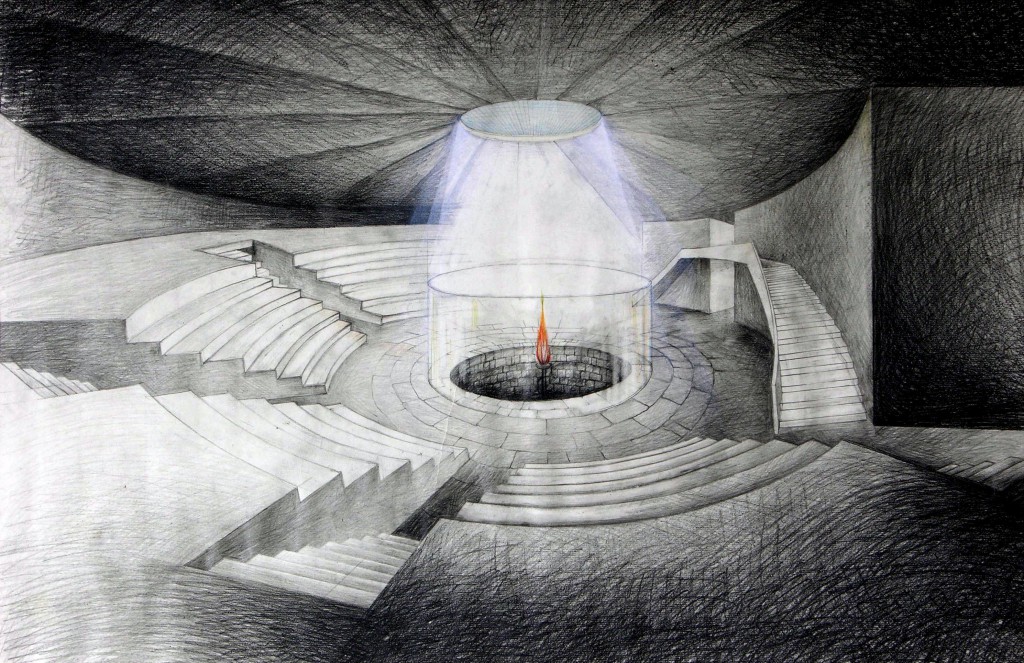 Inside view: ROOM OF DEPARTMENT,
1994, pencil, charcoal, pastel, 42 X 59 cm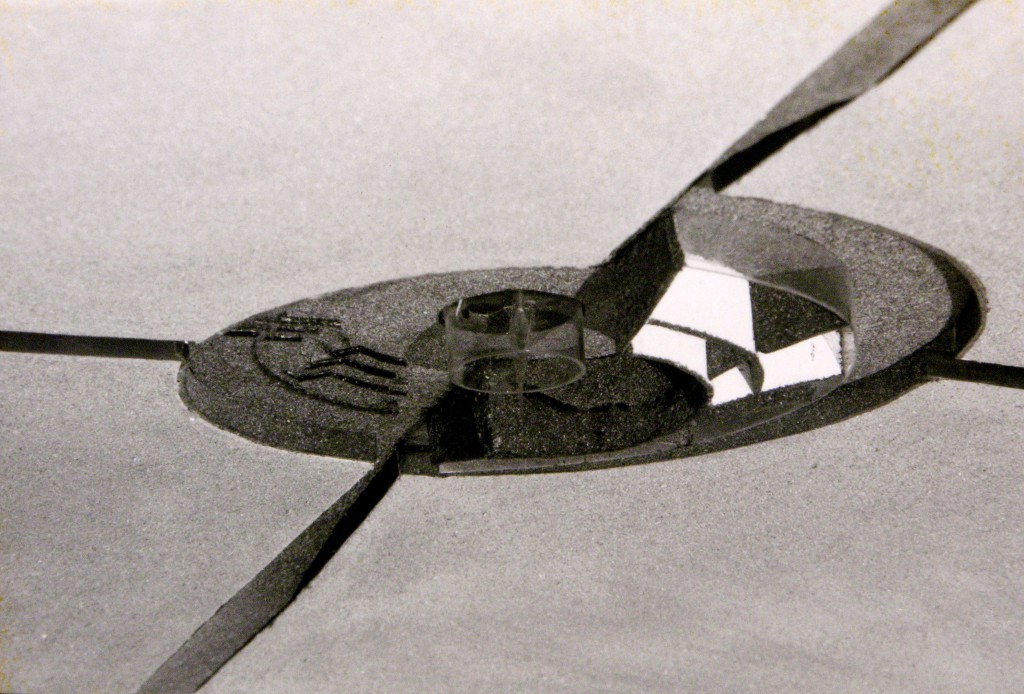 Model exterior view