Allegorie auf den Fortschritt

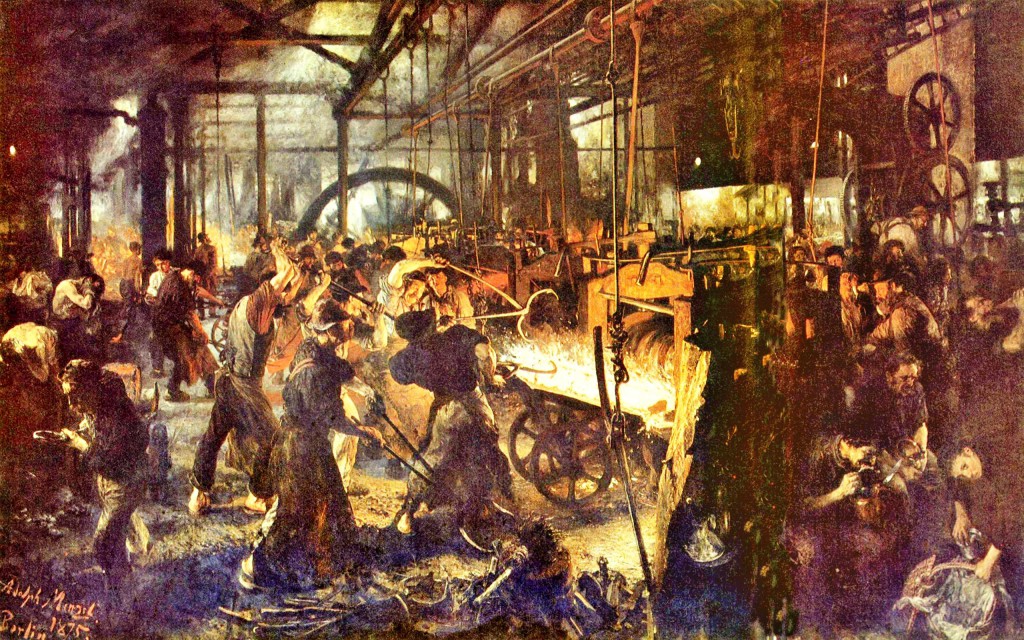
IRON ROLLING MILL, Adolf Menzel, 1872-1875, Alte Nationalgalerie Berlin, 1.6 x 2.6 m

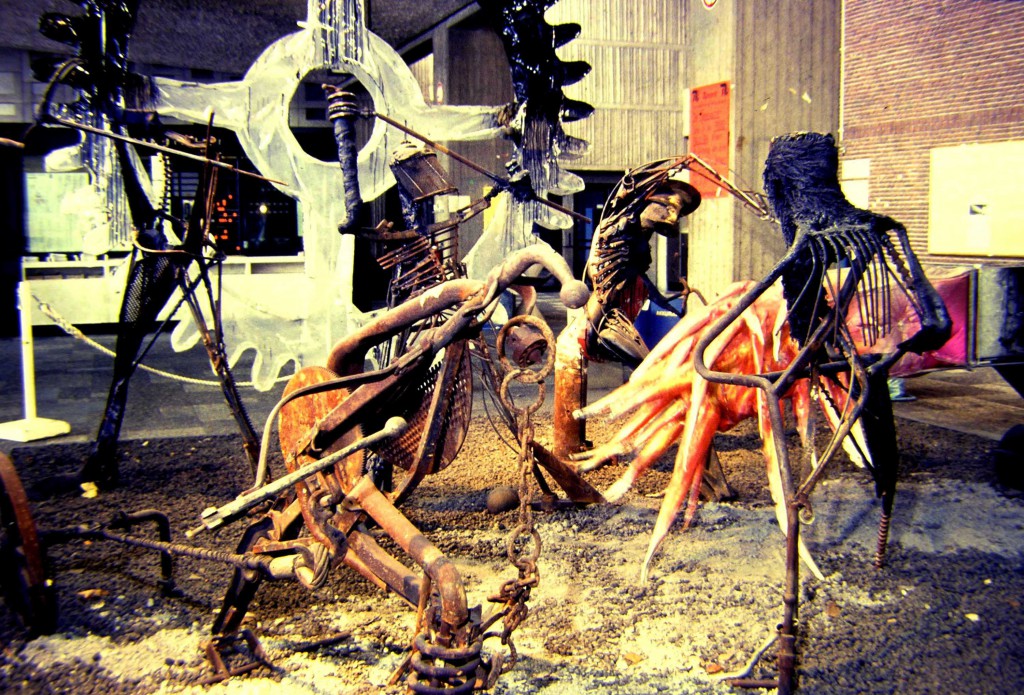
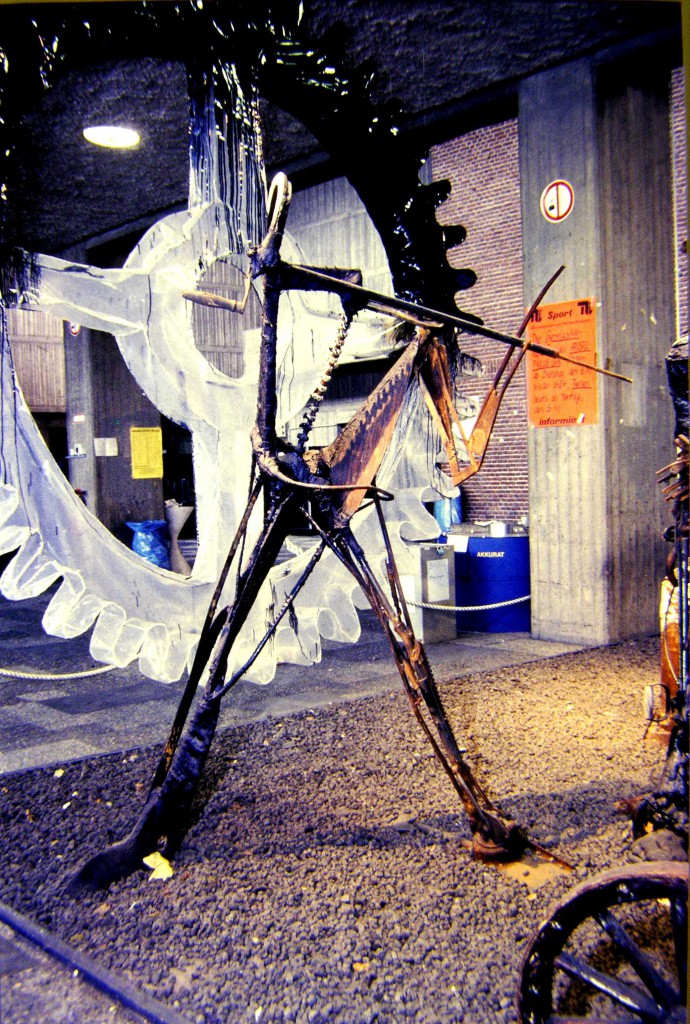
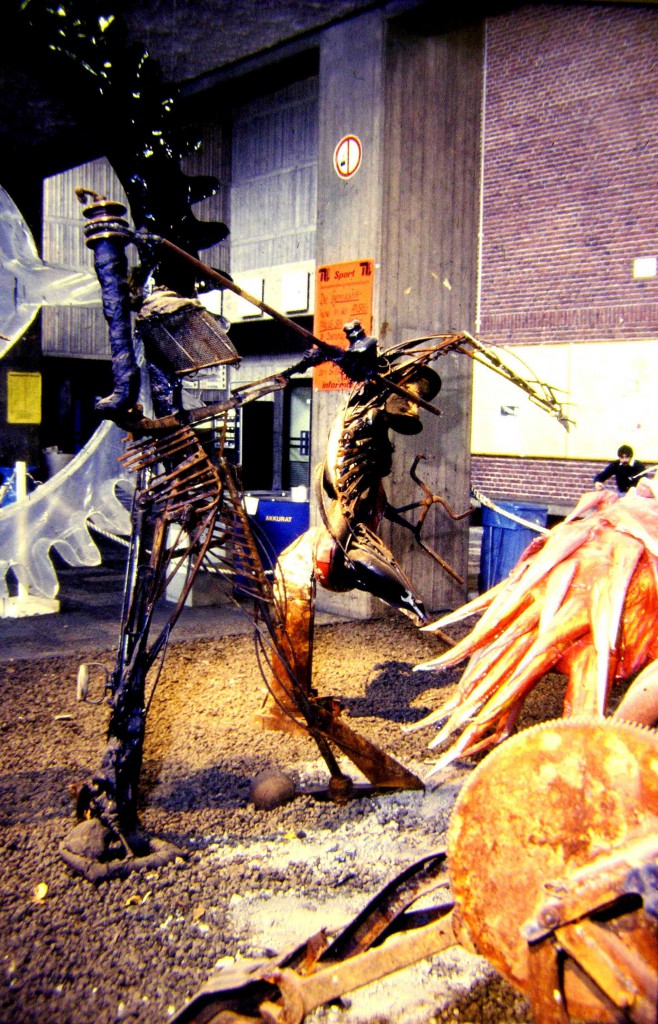
“Allegory of Progress” (1983/84)

Adolph Menzel’s monumental painting “Iron Rolling Mill” from 1875 is an emblem of the industrial revolution: the pathos of labor, the heat of the iron, the workers’ bodies in rhythm with the machines. Menzel encapsulates the dynamism of an era in a single image where progress, sweat, and technological exhilaration merge.

The sculptural work “Allegory of Progress” (1983/84) takes up this historical reference, but transposes it into the present—or rather, into the materialized reflection of a future. Menzel’s workers have become hybrid figures, composed of machine parts, scrap metal, iron, and mechanical fragments. Body and machine are indistinguishably fused; humanity exists only as a remnant, a skeletal shell, a quotation.

Thus, the original glorification of the industrial revolution is transformed into a critical metaphor: progress no longer appears as heroic pathos, but as an ambivalent, even destructive force. The "iron rolling mill workers" of the 1980s are no longer agents of growth, but allegories of alienation, technocratic stagnation, and the dark side of metropolitan development that feeds humanity into the machine.

The fact that the work was shown as part of the exhibition "The Future of Metropolises" (1984, TU Berlin) provides a programmatic context: it makes clear that the history of progress cannot be read linearly, but rather fragmented, with a view to its consequences.


„ARBEITER“ AN DER „LUPPE“

Zeichnungen und Prozesse zu ALLEGORIE AUF DEN FORTSCHRITT

  • Skizzen nach Adolph Menzels EISENWALZWERK, 1983/84, Tusche mit Pinsel auf Papier,44x30 cm
    SKETCHES ON MENZELS „EISENWALZWERK“, 1983/84, BRUSHED INK ON PAPER, 44 X 30 cm