Stadtratte

City Rat 1984

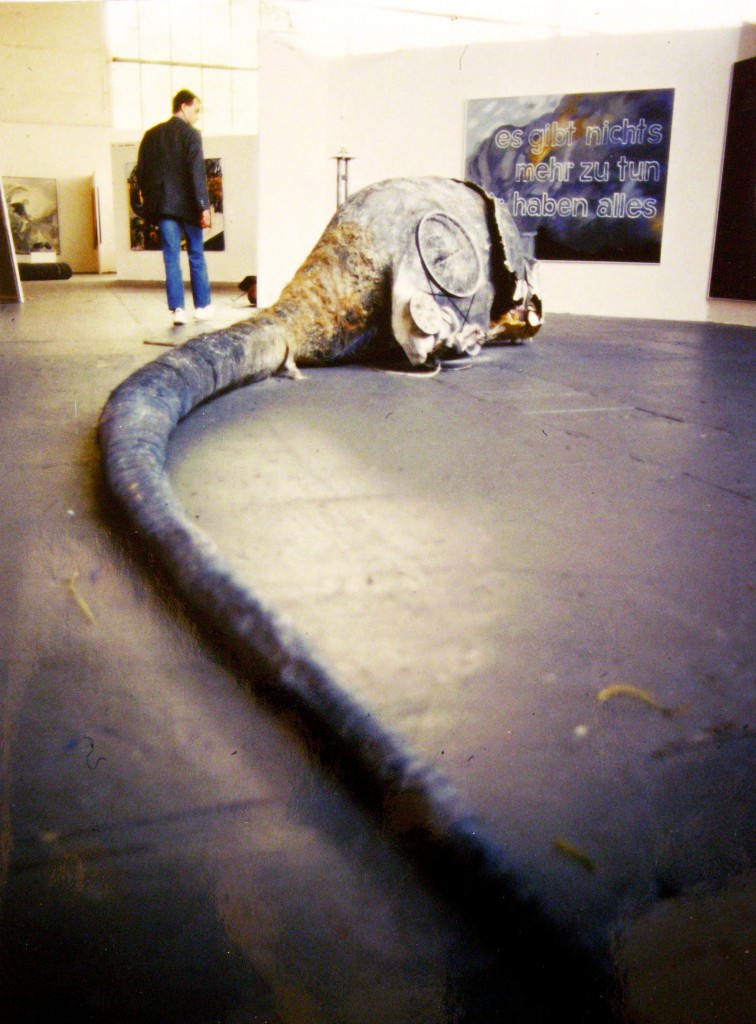
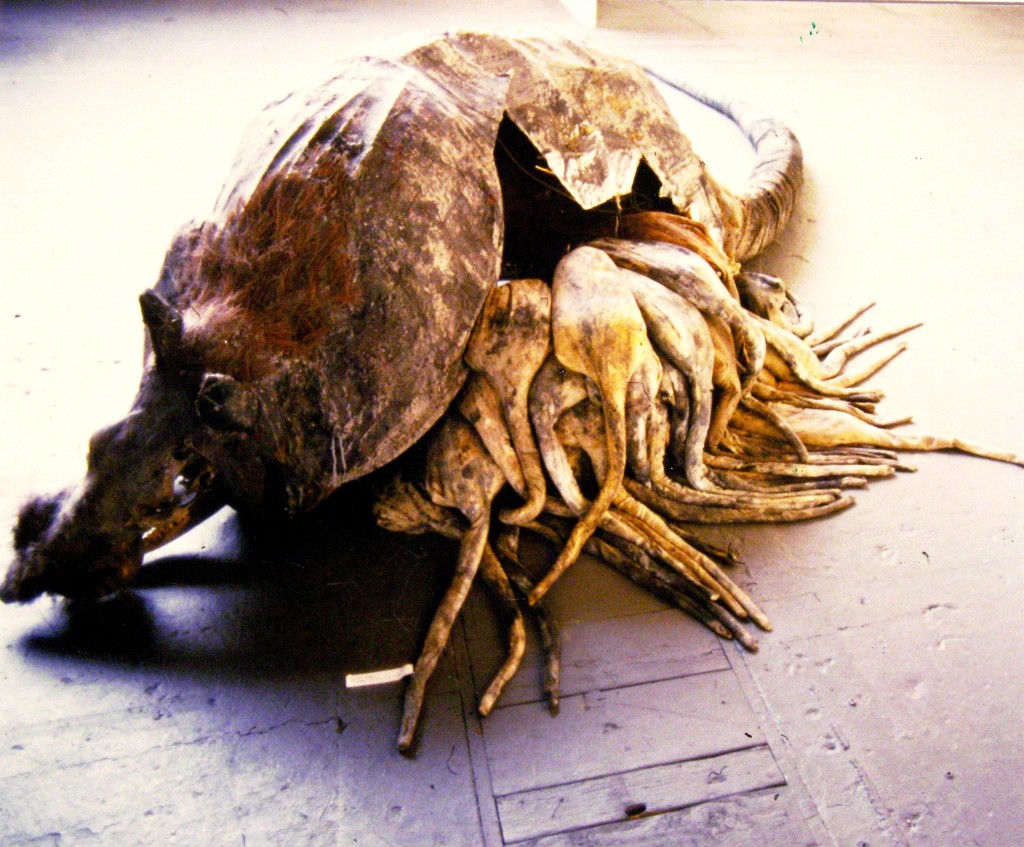
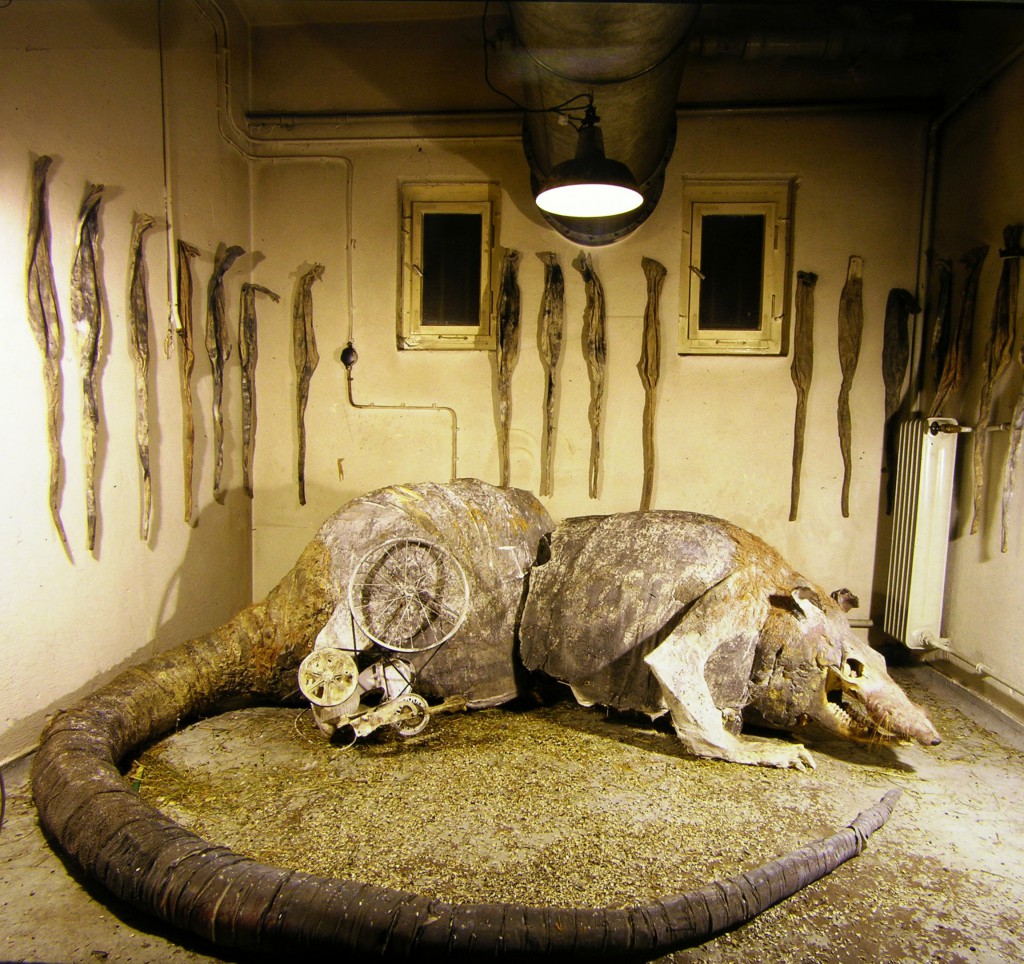
The installation CITY RATTE was created in 1984 in a disused factory space on Schinkestraße in Berlin. At its center: a larger-than-life rat, constructed from scrap materials, its head formed from a cow skull. The body appears simultaneously as a carcass and a machine; tentacle-like structures, reminiscent of rhizomes or entrails, spill from its ruptured flank. The sculpture was complemented by 25 live rats, whose movement countered the monumentality of the dead body.

In the industrial space, a place of rational work and discipline, this animal appears as a counter-image: a symbol of waste, decay, and the art of defiant survival. Kristeva's concept of the abject precisely describes the effect: the repressed—dirt, death, vermin—is monumentalized here. At the same time, the rhizomatic interior alludes to Deleuze/Guattari: a rampant, uncontrollable life.

Thus, the urban rat transforms the factory space into a post-industrial territory of the abject. It becomes an allegory of an urban form of existence: parasitic, untamed, rhizomatic—and therefore a radical antithesis to the order of cleanliness, productivity, and discipline.

Installation „STADTRATTE“, 1984, diverse Materialien, plus 25 lebenden Ratten. Hier: Schinkestrasse, Berlin

Installation, FBK-Berlin
INSTALLATION, FBK (FREIE BERLINER KUNSTAUSSTELLUNG)

Installation, FBK-Berlin
INSTALLATION, FBK (FREIE BERLINER KUNSTAUSSTELLUNG)

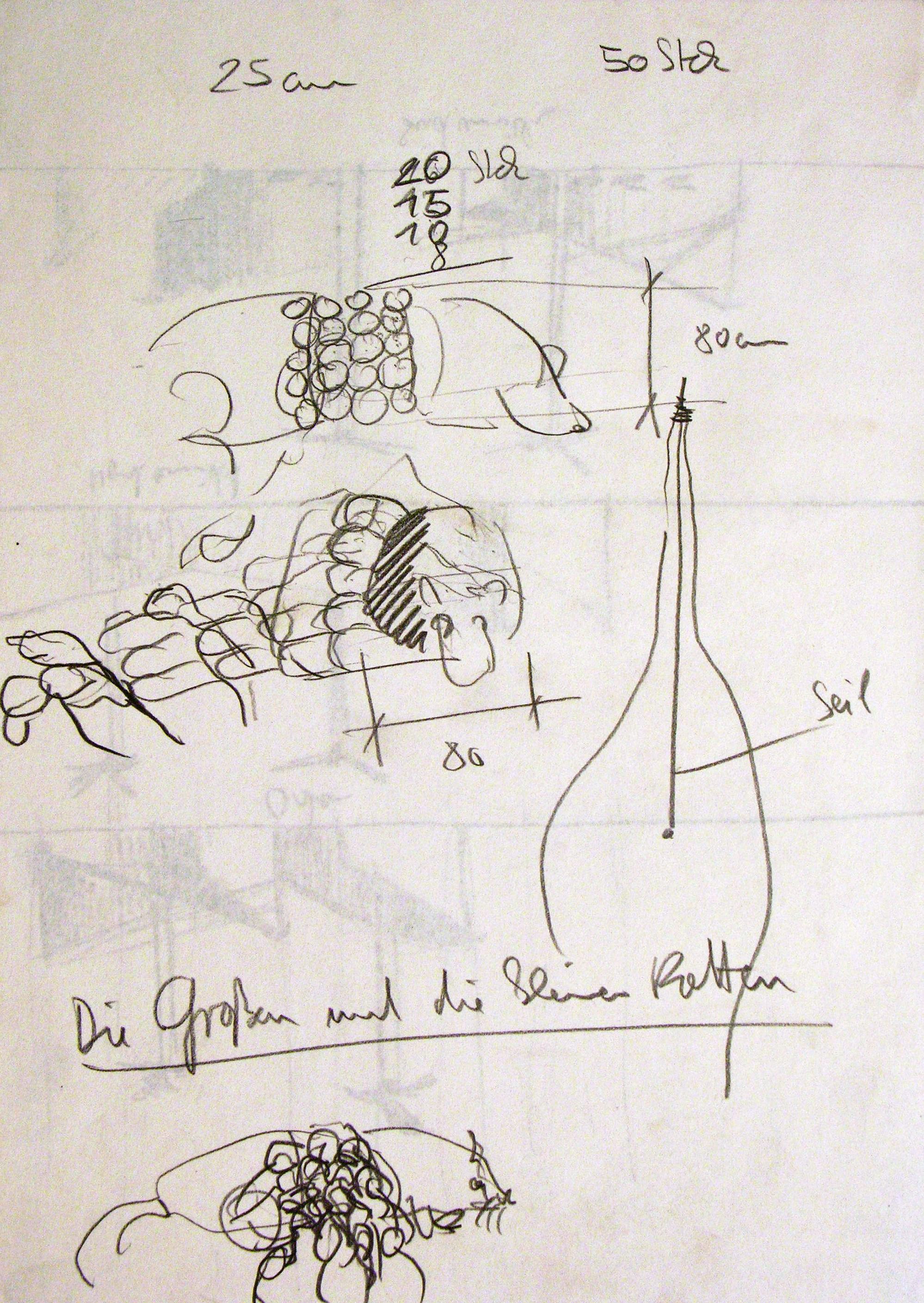
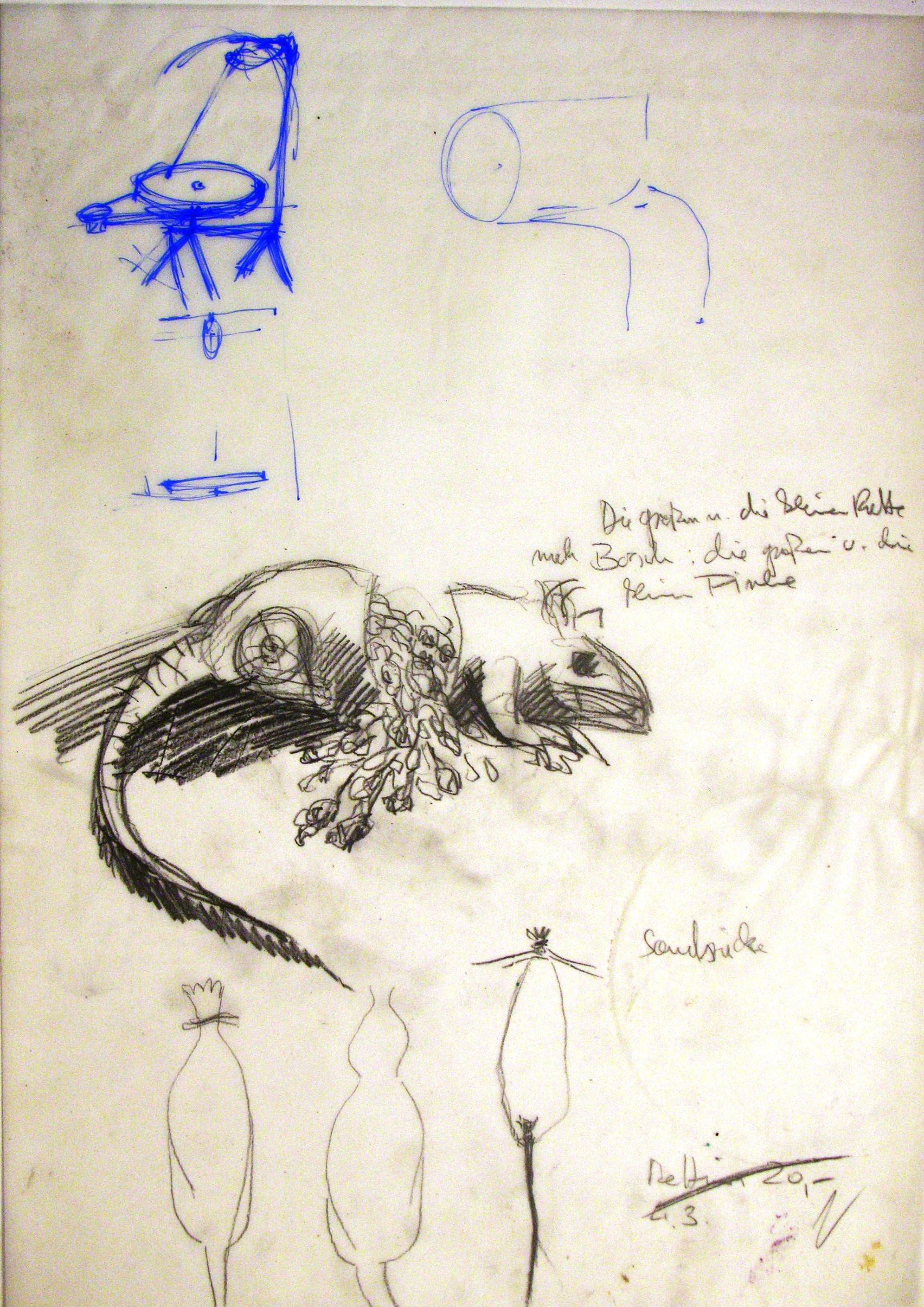
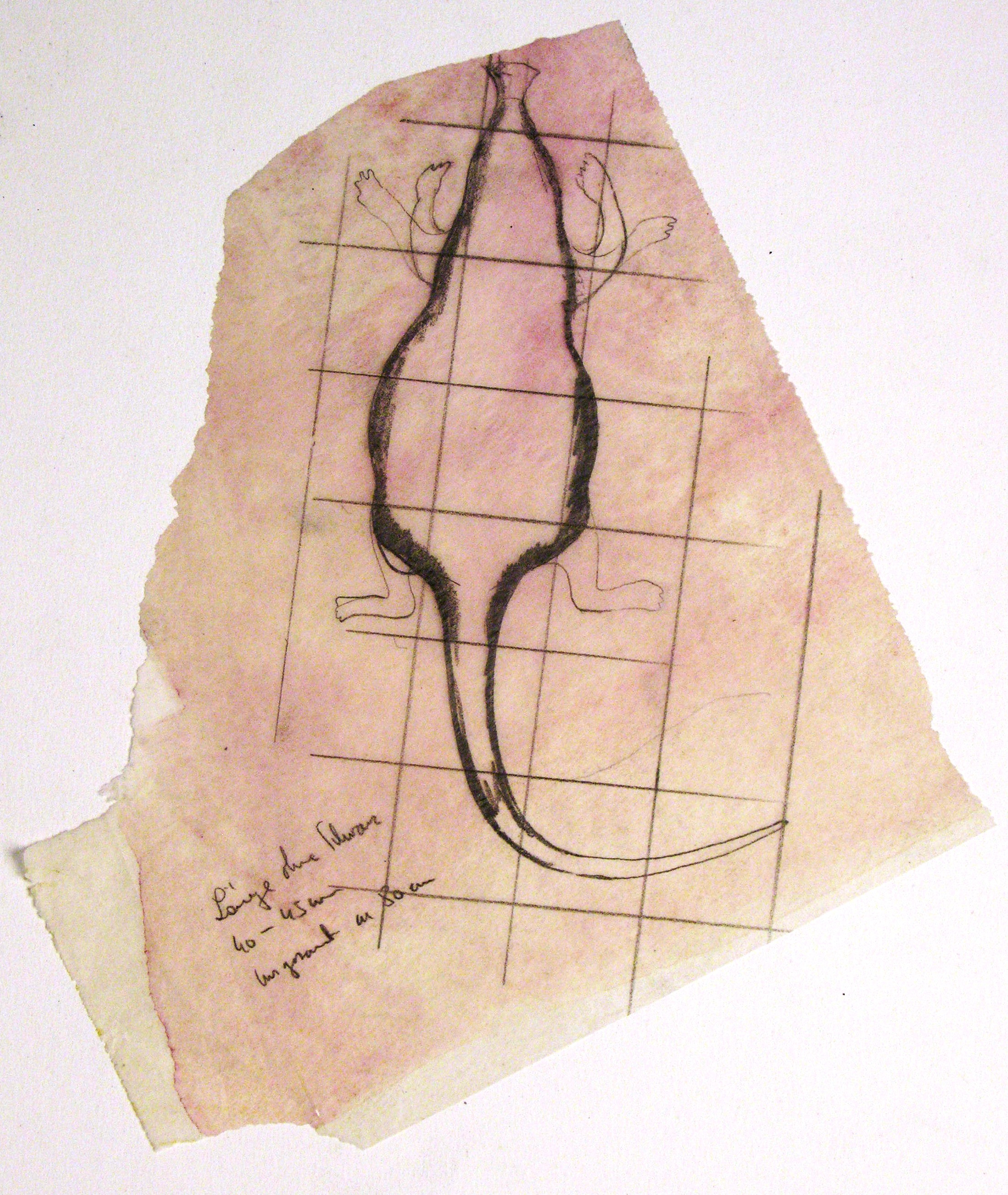
Zeichnungen zur „STADTRATTE“, 1984, Bleistift auf Karton, Transparentpapier, je 40×30 cm

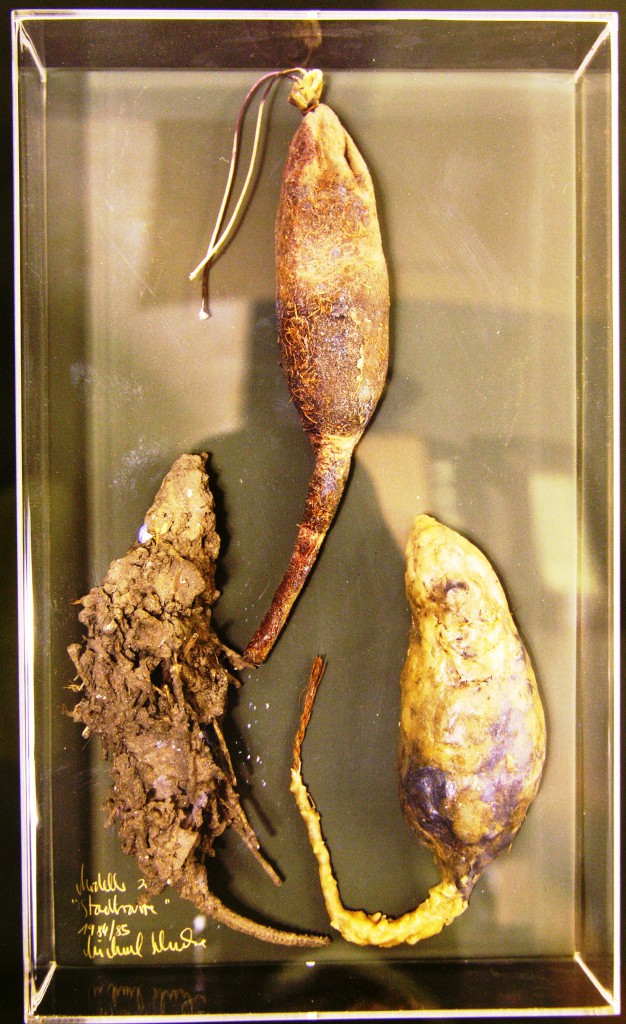
Modelle zur „STADTRATTE“, 1984/85, Wachs, Leinen, Sand, 50×28 cm